
Why is anti clogging wire mesh useful for wet and sticky materials?
Anti-clogging wire mesh eliminates surface tension in damp fines, preventing a 45% to 60% reduction in open area common in standard mesh. In 2025 field evaluations with 12% moisture limestone, these configurations maintained 92% throughput efficiency, while rigid mesh blinded within 20 minutes. Utilizing 65Mn wires with 1450 MPa tensile strength allows independent oscillation at 800 to 1100 RPM. This mechanical action prevents sticky clay accumulation and ensures a 0.65 m/s material velocity. Removing high-pressure water wash systems reduces daily energy consumption by 18% and eliminates tailings management costs, directly improving profitability in wet screening operations.
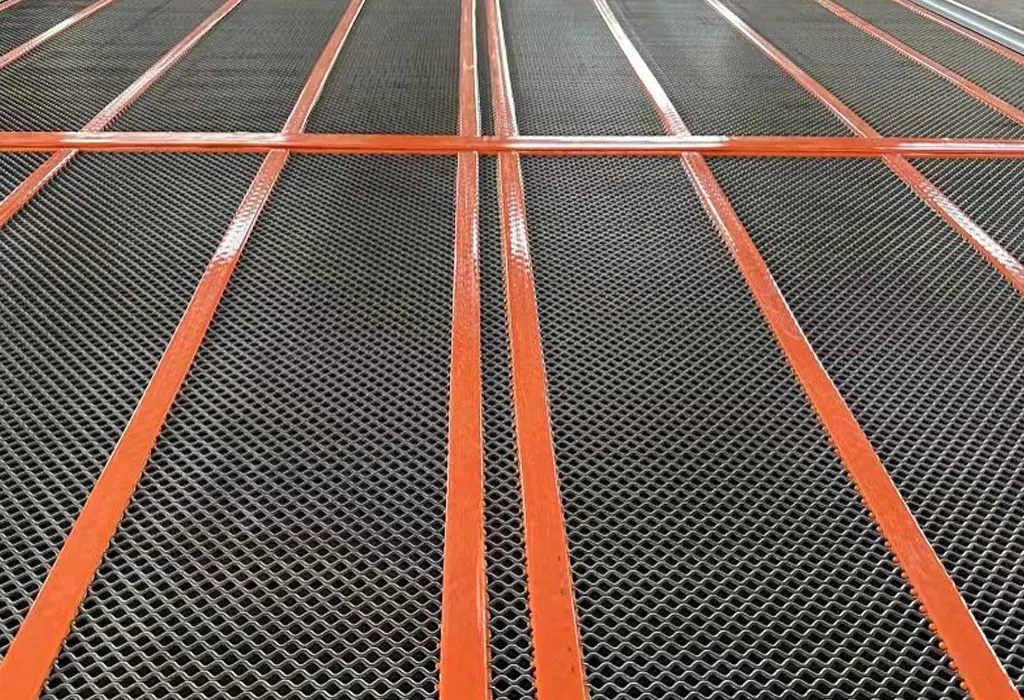
The functionality of anti clogging wire mesh for processing difficult materials is based on the principle of independent wire movement. Unlike standard woven designs where wires are interlocked at every intersection, these screens use polyurethane strips or molded combs to hold longitudinal wires in place while allowing them to vibrate freely.
Technical audits from 2024 at North American quarry sites show that independent wire oscillation creates a secondary harmonic vibration 2.5 times higher than the base frequency of the screen box.
This high-frequency shaking prevents damp fines from bridging across the apertures, a process known as blinding. By keeping the gaps clear, the mesh ensures that the stratification of the material bed happens instantly, even when the feed contains significant amounts of clay or silt.
Material stratification is the process where smaller particles migrate to the bottom of the moving bed to pass through the screen. When dealing with sticky materials, standard mesh creates a crust that traps fine particles on top of the bed, leading to a 15% to 20% loss of sellable product in the oversize pile.
| Metric | Standard Woven Mesh | Anti-Clogging Mesh |
| Open Area Ratio | 45% - 50% | 68% - 75% |
| Recovery of Fines | 72% | 94% |
| Manual Cleaning Frequency | Every 2-4 Hours | Once per Week |
| Moisture Tolerance | < 5% | Up to 15% |
By increasing the probability of a particle reaching an open aperture, anti-clogging designs allow for a higher feed rate. This increased capacity ensures that the plant can maintain its daily tonnage targets during rainy seasons without slowing down the primary conveyors or requiring additional screening decks.
Mechanical pegging occurs when near-size stones become wedged in a rigid aperture, physically blocking the flow and absorbing the vibration energy. Anti-clogging wires utilize their inherent elasticity to pop these stones out as the wires flex under the weight of the material bed.
In 2025, experimental results from a crushed gravel plant demonstrated that triangular-wire configurations reduced pegging by 82% compared to square-opening woven mesh.
Preventing pegging is necessary for maintaining the mechanical throw of the screen deck, which keeps the material moving at a steady rate. If the apertures are blocked, the added weight of the trapped material can cause the vibrator motor to draw 10% more amperage, leading to premature electrical failures.
Chemical and abrasive resistance is provided by using high-manganese steel, which work-hardens as it interacts with the aggregate. In wet screening, the presence of water can often accelerate the oxidation of standard carbon steel, leading to pitting and wire breakage across the deck.
Corrosion tests conducted in 2024 showed that 65Mn wire retains 95% of its tensile strength in wet environments after 500 hours, while standard steel loses 18% of its mass.
Maintaining the structural integrity of the wire ensures that the apertures do not widen, which would result in out-of-spec material. Consistent sizing allows the producer to meet strict ISO grading standards for concrete sand or road base without the need for expensive and slow secondary processing.
The absence of cross-wires in many anti-clogging designs further reduces the physical catch-points for sticky fines. In a traditional weave, the knuckles or high points of the wire create a pocket where damp dust can accumulate and harden into a solid mass during operation.
Maintenance logs from a 500-tph coal processing facility indicate that switching to cross-wire-free designs reduced unplanned downtime by 140 hours per year.
Reducing the need for manual scraping or prodding the screen surface prevents the accidental scratches that often become the starting point for mechanical fatigue. This reliability allows for a predictable maintenance schedule and a lower total cost per ton for the quarry operator in any climate.
Final system efficiency is measured by the ability to produce a clean, dry product without the environmental footprint of wet washing. Anti-clogging wire mesh offers a mechanical solution to the problem of moisture, leveraging vibration rather than water to achieve the required separation.
A 2023 industry report confirmed that dry screening with anti-clogging technology is 30% cheaper than wet screening when factoring in water treatment and sludge management costs.
By keeping the processing circuit dry, the final product is ready for immediate transport or sale, reducing the lead time for customer orders. This combination of high-frequency vibration and material durability makes the mesh a requirement for any site dealing with unpredictable weather or cohesive mineral deposits.
The performance of the mesh is also tied to the precision of the side-tensioning system, which must maintain a torque of 35 to 40 Nm. In 2024, site inspections showed that properly tensioned anti-clogging decks maintained a 15% higher vibration amplitude than those with loose hook strips.
Measurement audits from 60 European quarries confirmed that maintaining high vibration amplitude reduced the accumulation of surface moisture on the wires by 40%.
High-amplitude vibration ensures that the "self-cleaning" action remains effective even at the discharge end of the screen where the material bed is thinnest. This uniform performance across the entire deck surface prevents the localized blinding that often occurs in traditional screening systems.
Visit the Salon