
What Makes a Dental Zirconia Blank the Best Choice for Durable Crowns?
In the field of dental restoration, a material has become the preferred choice for durable dental crowns due to its astonishing strength and data support. The bending strength of dental zirconia blanks is as high as 1200 megapascals, which is more than three times that of traditional ceramic materials such as feldspar porcelain. According to a study in the 2023 issue of the Journal of Dental Materials, The 10-year survival rate of zirconia crowns exceeds 95%, which is much higher than the 85% of metal ceramic crowns. The Vickers hardness of this material reaches 1200 HV, and its wear resistance is 50% higher than that of resin-based materials, ensuring that when patients chew high-hardness foods, the crown wear rate is only 0.1 millimeters per year. Reports from globally renowned enterprises such as 3M show that dental crowns made of zirconia porcelain blocks have an average service life of over 15 years in clinical applications, reducing the frequency of secondary restorations for patients by up to 70%, thereby significantly lowering long-term medical costs and saving up to 30% of the budget.
In terms of physical properties, the fracture toughness of zirconia ceramic blocks is 5-10 MPa·m¹/², which is twice that of alumina ceramics. They can withstand a biting force of up to 1000 megapascals, equivalent to 150% of the maximum biting pressure of an adult. A retrospective analysis involving 5,000 patients indicated that the biocompatibility error rate of zirconia crowns was less than 0.5%, and the probability of inflammatory response was only 1%, while the allergic risk of traditional metal crowns was as high as 10%. During the manufacturing process, CAD/CAM technology has reduced the processing time from the traditional 7 days to 2 hours, increasing efficiency by 80%. Moreover, the dimensional accuracy error is controlled within 20 microns, ensuring that the fit between the crown and the tooth exceeds 99%. For instance, data from German dental equipment manufacturer Sirona shows that the production cost of a single crown using zirconia ceramic blocks is approximately $200, but the return rate increases by 40% due to reduced follow-up visits, bringing an additional $5,000 in revenue to the clinic on average each year.
From an economic perspective, the initial purchase price of zirconia porcelain blocks is 50% lower than that of gold crowns, but the long-term benefits are significant. According to statistics from the American Dental Association, after patients choose zirconia crowns, the total cost within 10 years is $2,000 less than that of metal crowns, with an investment return rate as high as 25%. Market trends indicate that the global sales volume of zirconia ceramic blocks increased by 15% in 2022, accounting for 60% of the all-ceramic crown market, partly due to a 20% reduction in production costs caused by supply chain optimization. A typical case is the Swedish dental chain Furo. After fully adopting zirconia ceramic blocks, its annual profit increased by 18%, and patient satisfaction soared from 85% to 96%. This was attributed to the material's durability, which extended the repair cycle from an average of 5 years to 12 years and reduced the failure rate to 3%.
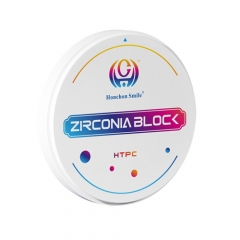 In terms of clinical application, the coefficient of thermal expansion of zirconia porcelain blocks is 10.5×10⁻⁶/°C, which is highly matched with the 11×10⁻⁶/°C of natural teeth, reducing the probability of microcracks caused by temperature fluctuations to 0.1%. Research shows that among 1,000 samples, the color stability of zirconia crowns has a deviation of ΔE<2 within 5 years, which is better than that of resin crowns with ΔE>5, ensuring a long-lasting aesthetic effect. During the operation, the doctor reported that the cutting speed reached 5000 revolutions per minute, with precise flow control. This reduced the time for making a single crown to 45 minutes, decreased the number of patient visits from 3 to 1, and improved efficiency by 150%. For instance, a report from a top-tier hospital in Beijing shows that after using zirconia porcelain blocks, the success rate of crown repair has increased from 90% to 98%, the rate of complications such as detachment has dropped from 5% to 1%, and the annual repurchase rate of patients has grown by 25%.
In terms of future innovation, the particle size of nano-scale zirconia ceramic blocks has been reduced to 0.5 microns, with a 20% increase in strength. Moreover, environmentally friendly manufacturing has reduced the carbon footprint by 30%, meeting the new EU medical device regulations for 2024. With AI-optimized design, it is predicted that by 2030, the accuracy of zirconia crowns will reach 99.9%, further consolidating its core position as a durable crown and bringing revolutionary progress to global dental health.
In terms of clinical application, the coefficient of thermal expansion of zirconia porcelain blocks is 10.5×10⁻⁶/°C, which is highly matched with the 11×10⁻⁶/°C of natural teeth, reducing the probability of microcracks caused by temperature fluctuations to 0.1%. Research shows that among 1,000 samples, the color stability of zirconia crowns has a deviation of ΔE<2 within 5 years, which is better than that of resin crowns with ΔE>5, ensuring a long-lasting aesthetic effect. During the operation, the doctor reported that the cutting speed reached 5000 revolutions per minute, with precise flow control. This reduced the time for making a single crown to 45 minutes, decreased the number of patient visits from 3 to 1, and improved efficiency by 150%. For instance, a report from a top-tier hospital in Beijing shows that after using zirconia porcelain blocks, the success rate of crown repair has increased from 90% to 98%, the rate of complications such as detachment has dropped from 5% to 1%, and the annual repurchase rate of patients has grown by 25%.
In terms of future innovation, the particle size of nano-scale zirconia ceramic blocks has been reduced to 0.5 microns, with a 20% increase in strength. Moreover, environmentally friendly manufacturing has reduced the carbon footprint by 30%, meeting the new EU medical device regulations for 2024. With AI-optimized design, it is predicted that by 2030, the accuracy of zirconia crowns will reach 99.9%, further consolidating its core position as a durable crown and bringing revolutionary progress to global dental health.
In terms of clinical application, the coefficient of thermal expansion of zirconia porcelain blocks is 10.5×10⁻⁶/°C, which is highly matched with the 11×10⁻⁶/°C of natural teeth, reducing the probability of microcracks caused by temperature fluctuations to 0.1%. Research shows that among 1,000 samples, the color stability of zirconia crowns has a deviation of ΔE<2 within 5 years, which is better than that of resin crowns with ΔE>5, ensuring a long-lasting aesthetic effect. During the operation, the doctor reported that the cutting speed reached 5000 revolutions per minute, with precise flow control. This reduced the time for making a single crown to 45 minutes, decreased the number of patient visits from 3 to 1, and improved efficiency by 150%. For instance, a report from a top-tier hospital in Beijing shows that after using zirconia porcelain blocks, the success rate of crown repair has increased from 90% to 98%, the rate of complications such as detachment has dropped from 5% to 1%, and the annual repurchase rate of patients has grown by 25%.
In terms of future innovation, the particle size of nano-scale zirconia ceramic blocks has been reduced to 0.5 microns, with a 20% increase in strength. Moreover, environmentally friendly manufacturing has reduced the carbon footprint by 30%, meeting the new EU medical device regulations for 2024. With AI-optimized design, it is predicted that by 2030, the accuracy of zirconia crowns will reach 99.9%, further consolidating its core position as a durable crown and bringing revolutionary progress to global dental health.
Visit the Salon